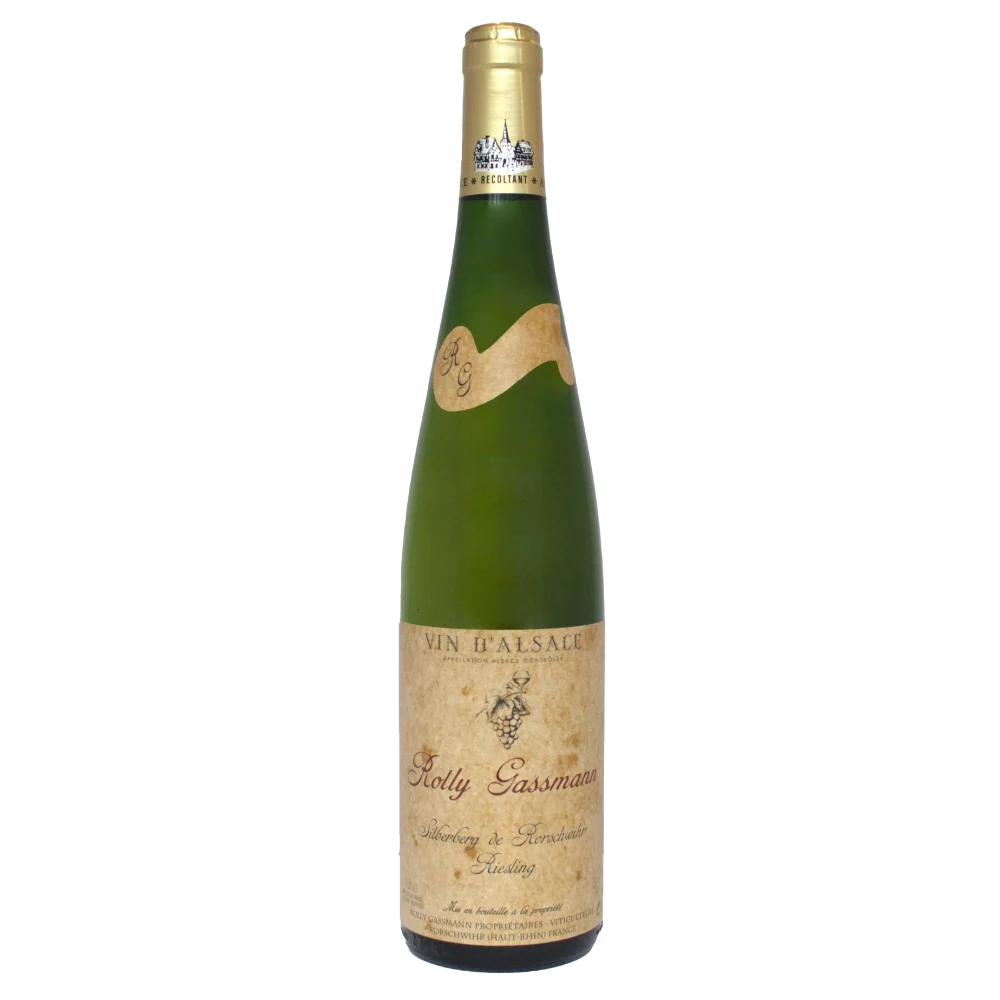
Domaine Rolly Gassmann Silberberg de Rorschwihr Riesling
Country: France
Wine Region: Alsace
Wine Type: White Wine
Varietal: Riesling
Description
Over millions of years, natural watersheds formed between Rorschwihr and Saint-Hippolyte. Intense run-off of acidic water from the surrounding granite hills has partially or even completely leached the carbonates from the Muschelkalk soils, resulting in slopes that are markedly steeper than those of neighbouring vineyards. This distinctive combination of soil, subsoil and relief affects how heat is stored and released, bringing the vines’ growth cycle forward while prolonging the ripening of the grapes. The site also experiences pronounced differences between daytime and nighttime temperatures, and a protective mountain belt shields it from cold north winds, all of which contribute to the development of fresh, finely balanced acidity in the fruit.